
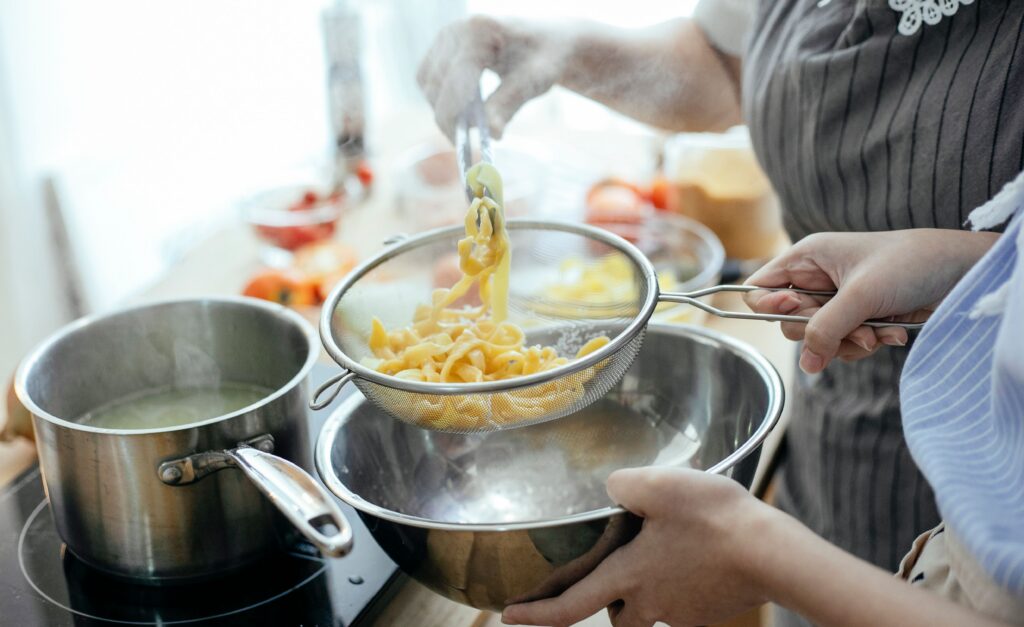
7 Common Pasta-Cooking Mistakes…and How to Fix Them
Cooking pasta well is less about complicated technique and more about getting a handful of small details right. If your pasta tastes bland, sticks together, turns mushy, or never seems to hold onto the sauce, one of these common mistakes may be the reason.
Undersalting the Water
Pasta absorbs water as it cooks, so seasoning the water is one of the few opportunities to season the pasta itself rather than relying entirely on the sauce.
For a large pot of water, start with roughly 1 tablespoon of kosher salt per 4 quarts of water, then adjust based on the saltiness of the sauce you plan to use. A salty cheese or cured meat sauce may need less; a simple tomato sauce may benefit from more. The goal is well-seasoned pasta, not aggressively salty water.
Using Too Little Water
Too little water makes the pot crowded and causes the temperature to drop sharply when the pasta goes in. It also increases the chance of noodles sticking together.
Use a pot large enough for the pasta to move freely once it softens. Stir immediately after adding the pasta, then again several times during the first two minutes. That early stirring matters more than constantly stirring for the entire cook time.
Adding Oil to the Cooking Water
Oil floats on top of water, so it does not meaningfully prevent pasta from sticking while it cooks. It can also leave a light coating on drained pasta that interferes with sauce adhesion.
Skip the oil. Proper water volume and early stirring solves the sticking problem more effectively.
Overcooking the Pasta
Package directions are useful, but they are not always exact. Pot size, burner strength, and the amount of water can all affect cooking time.
Begin tasting the pasta 2 minutes before the suggested time. For al dente pasta, the center should be cooked through but still offer slight resistance when you bite into it.
Rinsing Hot Pasta
Rinsing removes the thin layer of starch on the surface of the noodles. That starch helps sauce cling and contributes to a smoother final texture.
For hot dishes, drain the pasta and move it directly into the sauce. Save rinsing for cold pasta salads or recipes where you need to stop the cooking process immediately.
Draining Away All the Pasta Water
Before draining, scoop out at least 1 cup of pasta water. You may not use all of it, but having it nearby gives you control over the sauce.
Add a few tablespoons at a time while tossing the pasta. The starch helps bring fat and liquid together, which is why a sauce can go from thick or separated to smooth and glossy with only a small addition of water.
Pouring Sauce Over Pasta at the End
Serving plain pasta with sauce spooned over the top keeps the two components separate.
Instead, transfer the pasta into the sauce 1 to 2 minutes before it is fully cooked. Toss everything together over low to medium heat, adding a splash of pasta water if needed. Those final minutes allow the noodles to finish cooking in the sauce and absorb some of its flavor.
Learning how to cook pasta properly comes down to control: season early, taste before the timer ends, save the starch, and finish the pasta in the sauce. Those small habits make a much bigger difference in the quality of your dish than adding more ingredients at the end.

